
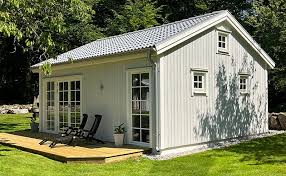
An Attefall house offers a brilliant solution for compact living, but its smaller footprint can sometimes feel limiting. The key challenge is often making the space feel wider and more open than it actually is. With a few strategic design choices, you can transform a narrow room into an area that feels spacious and inviting. This guide will walk you through professional techniques to create the illusion of width in your attefall house (Attefallshus).
How can I use color to make a room look wider?
Color is one of the most powerful tools in your design arsenal. To create a sense of spaciousness, opt for light and cool colors. Shades like soft white, pale gray, light blue, and mint green reflect more light, making walls appear to recede. Painting the shorter end walls a slightly darker shade than the longer walls can also trick the eye, making the space feel more balanced and square. For a cohesive look, paint the trim and ceiling the same light color as the walls to blur the boundaries of the room and draw the eye upward.
What type of furniture is best for a narrow space?
When selecting furniture, think low-profile and multi-functional. Low-slung pieces, such as a sofa with low arms and back, keep the line of sight open and unobstructed, which contributes to a feeling of openness. Choose furniture with visible legs, like mid-century modern chairs or tables, as this creates a sense of space underneath. Avoid bulky, heavy pieces that can dominate a room. Instead, look for streamlined items that fit the scale of the space. Arranging furniture away from the walls, even by a few inches, can also prevent the room from feeling cramped.
How does lighting affect the perception of space?
Lighting plays a crucial role in how we perceive the size of a room. Maximize natural light by keeping window treatments minimal—think sheer curtains or simple blinds that can be fully opened. When it comes to artificial lighting, a layered approach works best. Use a combination of ambient, task, and accent lighting. Wall sconces or uplighters that wash the walls with light can make the room feel broader. Similarly, track lighting directed towards the longer walls can emphasize the length and create a feeling of width.
What other design tricks can create an illusion of width?
Beyond color and furniture, several other design elements can enhance the sense of space.
Use Mirrors: A large mirror placed on one of the longer walls can dramatically open up a room. It reflects light and the view, creating a powerful illusion of depth.
Incorporate Horizontal Lines: Stripes are a classic trick. A rug with horizontal stripes can visually stretch the floor, making the room appear wider. The same principle applies to horizontal shiplap on the walls or long, floating shelves.
Choose Reflective Surfaces: Incorporate glossy or reflective materials. A glass coffee table, metallic accents, or a high-gloss paint finish on cabinetry can bounce light around the room, making it feel brighter and larger.